
Countertop Edge Profiles
The edge profile is the finishing detail on any countertop. Here are the 20 edges we offer for granite, marble, quartz, quartzite, soapstone, schist and onyx countertops.
If you don’t see an edge profile you are interested in, just let us know. When you are ready, submit your dimensions for a free quote.


Eased
An eased edge is a square edge with the sharp corners lightly rounded off, just enough to take the sharpness off a truly square cut. From across the room it reads as a clean, straight line with a flat polished face that shows the full thickness of the slab.
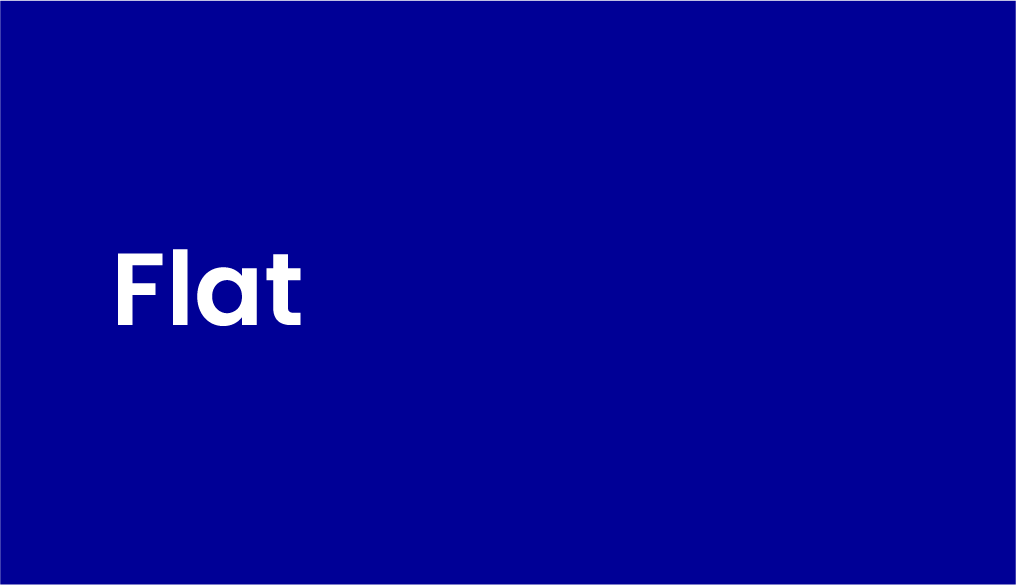
Flat
A flat edge, also called a flat polish or square edge, has a straight, vertical polished face with crisp corners at the top and bottom. Each corner gets only a tiny chamfer, enough that it is not sharp to the touch.

Pencil / Rounded Top & Bottom
A pencil edge rounds both the top and bottom corners with a small, even radius: more than an eased edge, far less than a bullnose. The face stays mostly flat, so from a distance the edge still reads as square, while it feels smooth under your hand.
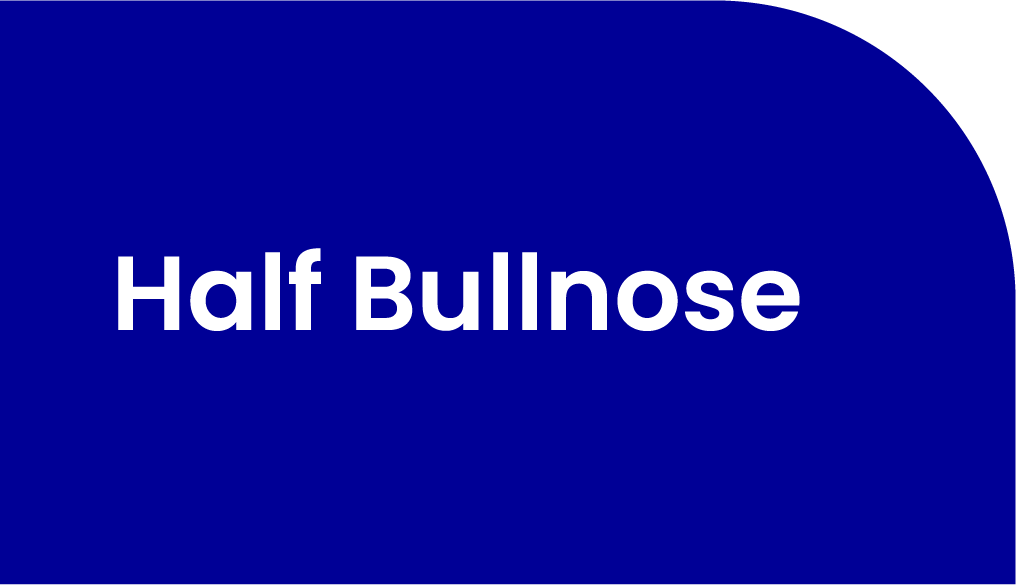
Half Bullnose / Round Over
A half bullnose, also called a round over, curves the top of the edge down in a smooth arc while the bottom stays flat. The larger the radius, the softer and more pronounced the curve.
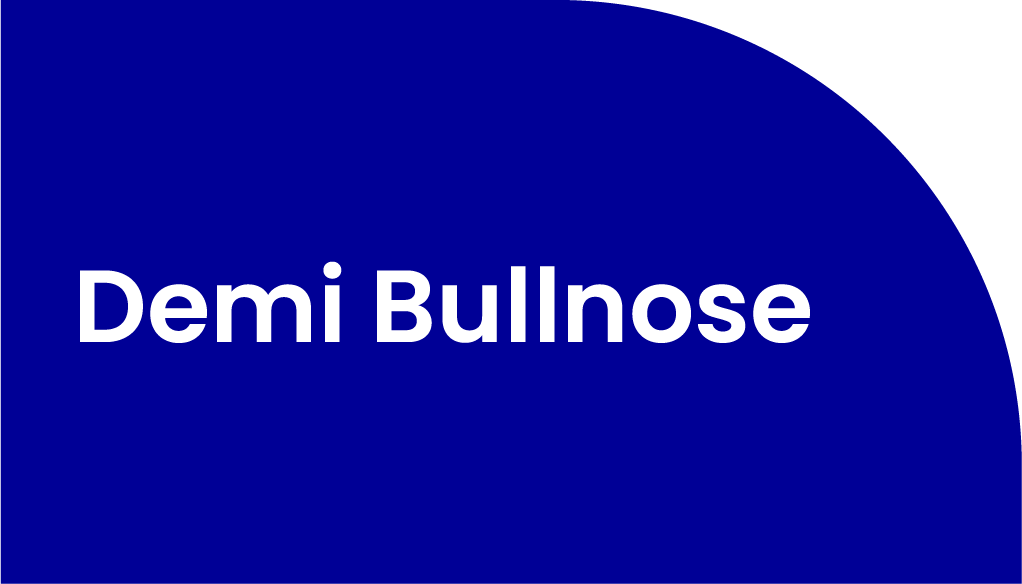
Demi Bullnose
A demi bullnose rounds the top of the edge in a soft curve and leaves a flat underside. On our profile drawing, the demi has a fuller curve than our half bullnose, reaching further back across the top and down the face, which makes the countertop look thicker.
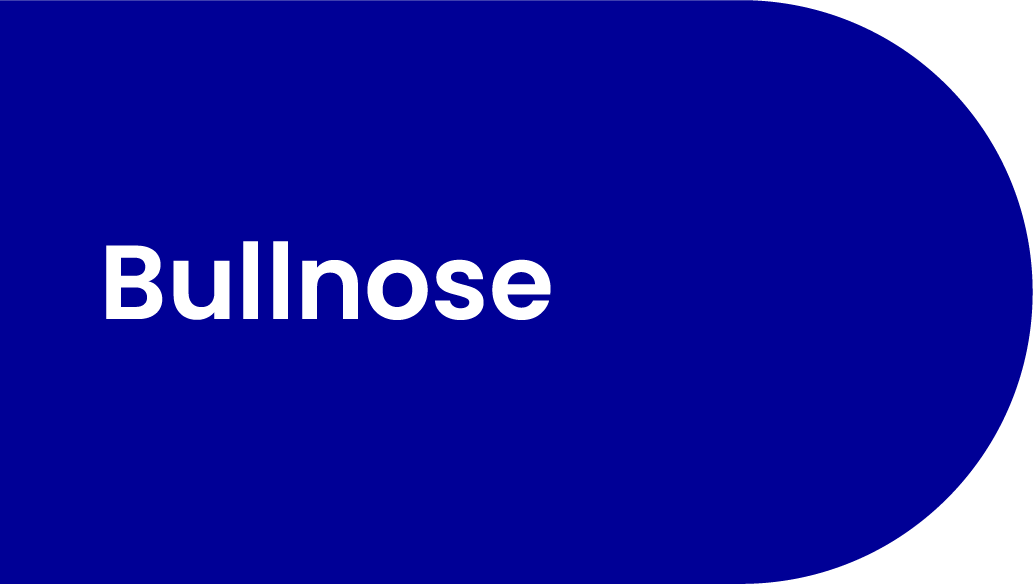
Bullnose
A full bullnose rounds the edge completely from top to bottom, so seen from the side it forms a half circle. With no corners at all, it has a soft, traditional look and makes the countertop appear a little thinner than a square edge does.
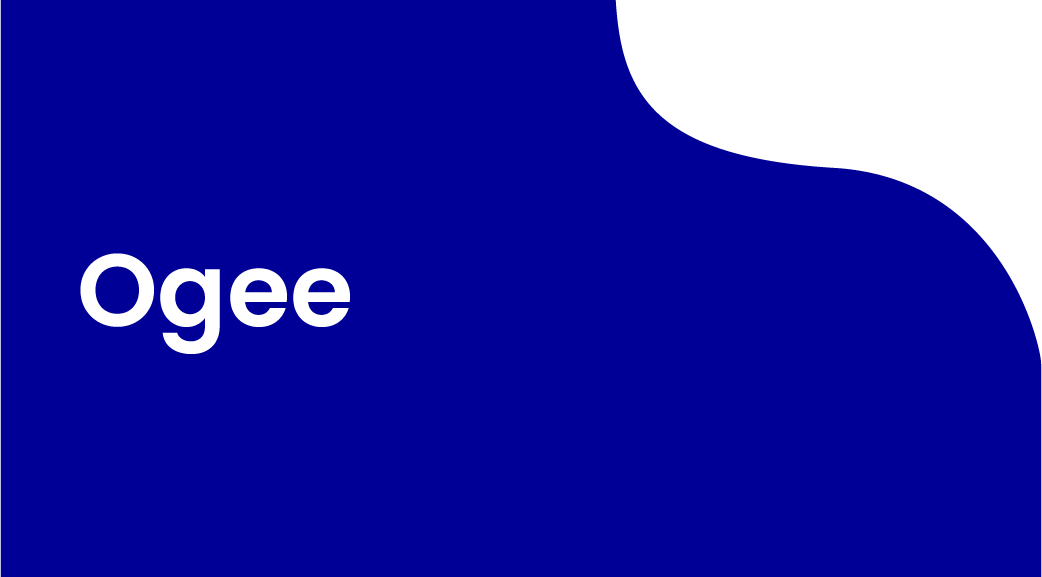
Ogee
The ogee is the classic decorative edge, with an S-shaped profile: a concave curve near the top flows into a convex curve below. The two curves catch light and shadow, so the edge reads like carved molding.

¼” Round
The quarter-inch round softens only the top corner with a small, even radius, while the face and bottom of the edge stay straight. It has a little more curve than an eased edge but keeps a mostly square look that shows the full thickness of the stone.
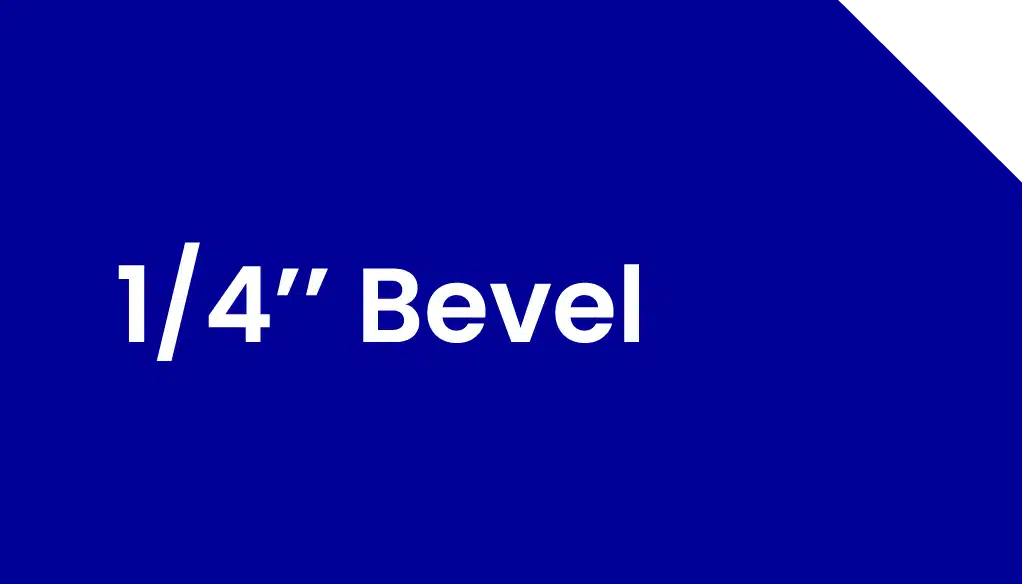
¼” Bevel
A quarter-inch bevel trims the top corner at a 45 degree angle, leaving a narrow flat facet between the countertop surface and the straight edge face. The small angled band outlines the counter and highlights the thickness of the stone without adding ornament.

Beveled Top & Bottom
This edge trims both the top and bottom corners at 45 degrees, leaving a flat face between two narrow angled facets. Because the profile matches top and bottom, it looks balanced and crisp from any angle.
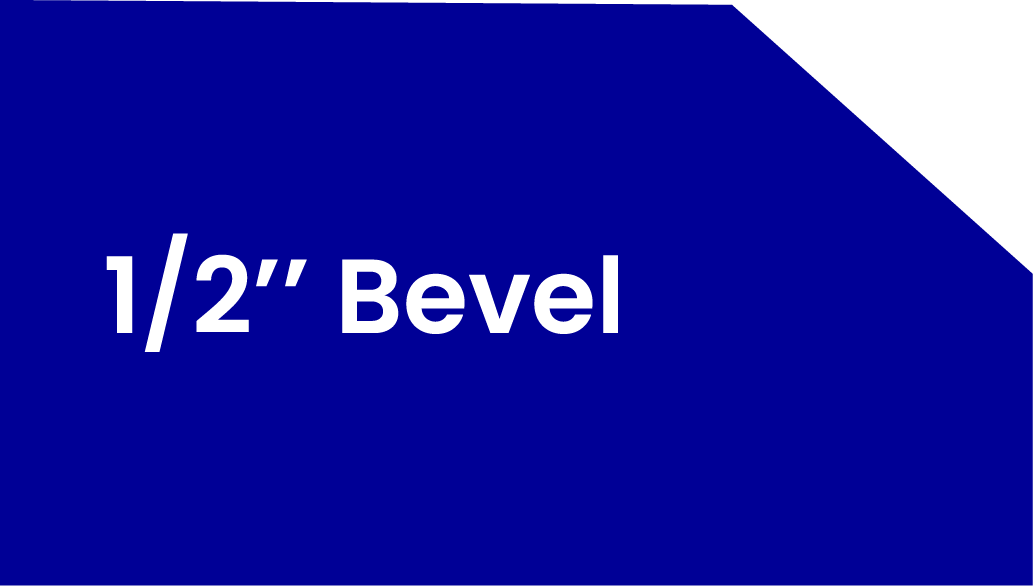
½” Bevel
The half-inch bevel cuts the top corner at 45 degrees, like the quarter-inch version but with a facet twice as wide. That wider angled band is easy to see, so it adds a clear design line to the edge while keeping everything straight and simple.
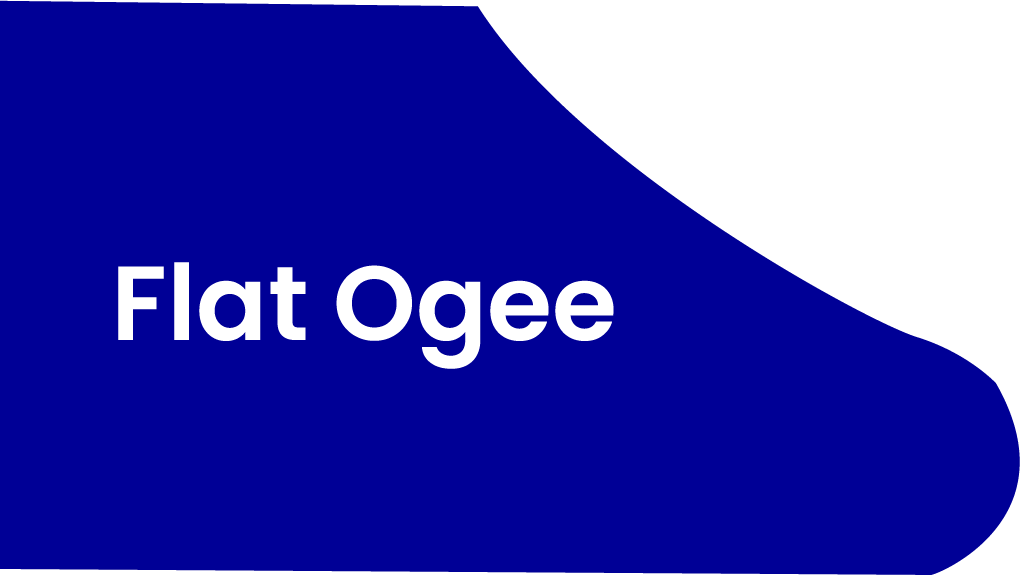
Flat Ogee
The flat ogee is a quieter version of the classic ogee. Its S-curve has a gentler, flatter slope at the top and finishes in a rounded bottom, so you get some of the ogee's shadow and detail without its full depth.

Ogee Bullnose
The ogee bullnose pairs an ogee's S-curve at the top with a fully rounded bullnose at the bottom. The result is a deep, sculpted edge with no square corner underneath, so the countertop looks full and substantial.

Cove
A cove edge has a concave, scooped curve cut into the top corner, so the edge dips inward before meeting the straight face below. The hollow casts a soft shadow line around the counter and gives a sculpted look that is less formal than an ogee.

Dupont
A dupont edge starts with a short, square step down from the top surface, then rolls into a rounded curve toward the bottom. The step leaves a crisp line along the top while the rounded lower half adds depth, a bolder relative of the ogee.

Triple Waterfall
A triple waterfall edge drops in three small rounded tiers, each one stepping out from the one above, like water running over ledges. It is one of the most detailed profiles, with strong shadow lines and a thick, layered look.
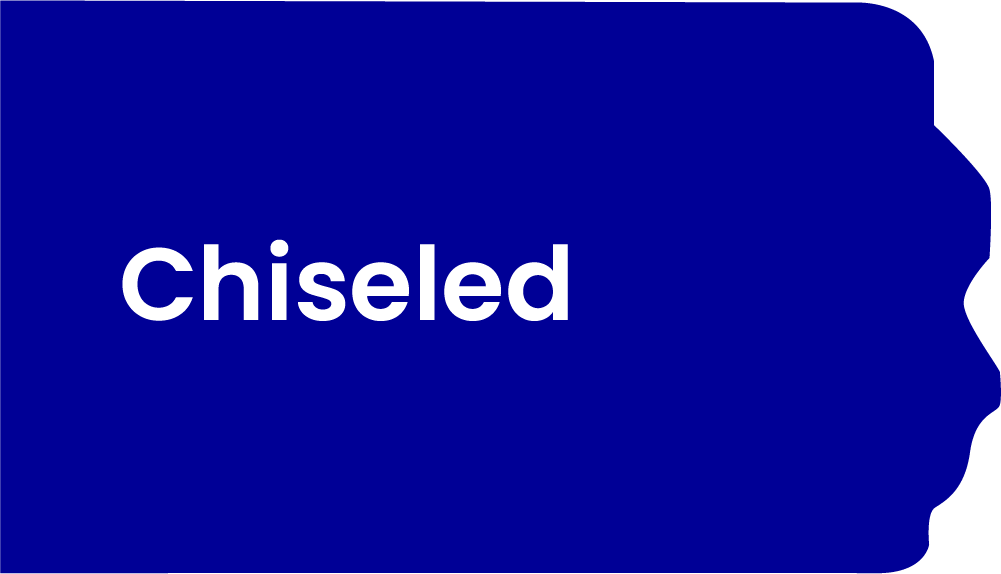
Chisel
A chisel edge, also called a chiseled or rock face edge, is rough on purpose. Instead of a smooth polished profile, the edge is chipped away to look like naturally broken stone, with an uneven, textured face.

Cove Ogee
A cove ogee starts with a concave cove at the top and flows into an ogee's S-curve below, combining two decorative shapes in one deep profile. It is among the fullest, most ornate edges, with layered shadow lines that read like carved trim.
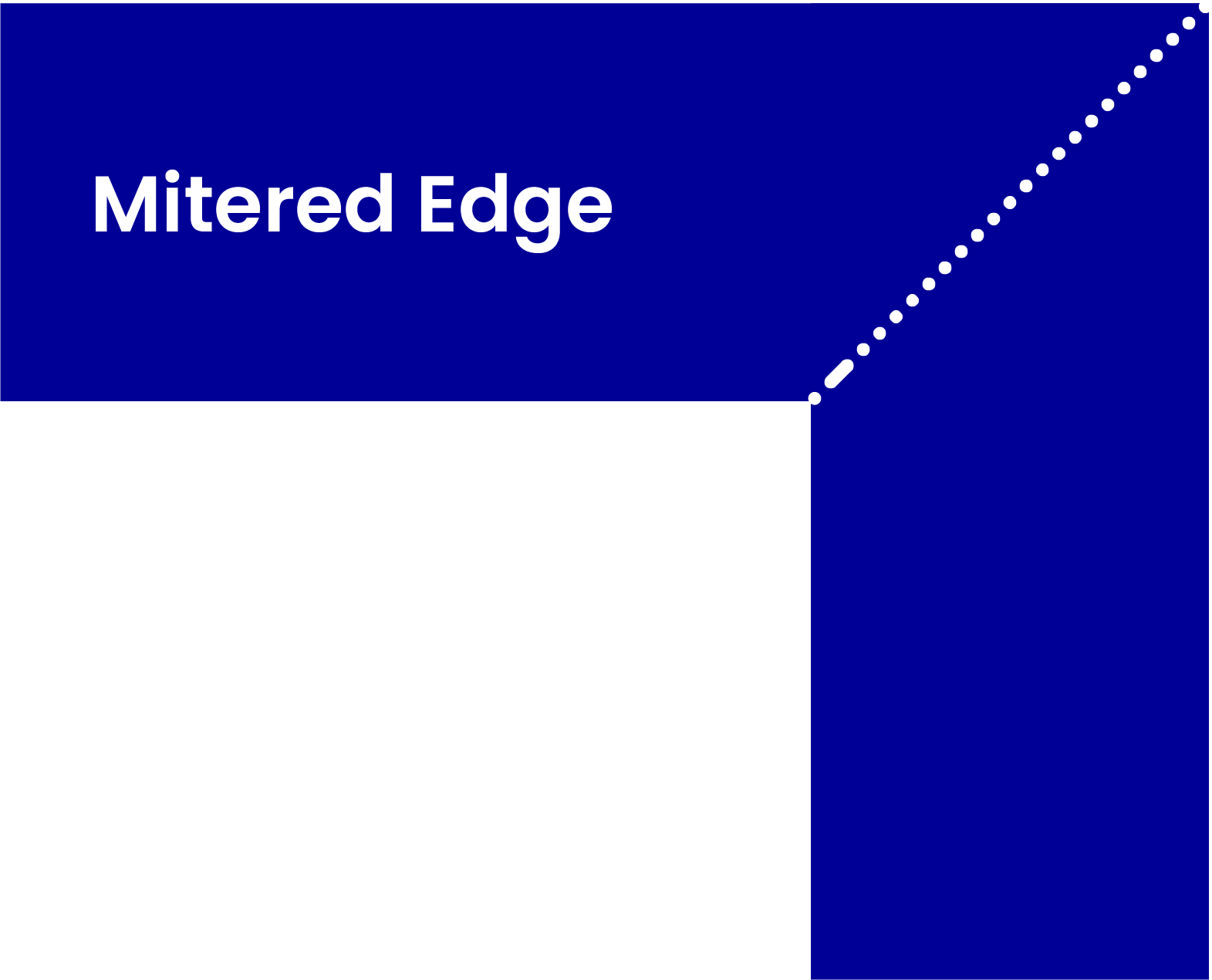
Mitered Edge
A mitered edge makes a countertop look much thicker than the slab really is. A strip of stone is cut at 45 degrees and joined to a matching 45 degree cut along the countertop edge, forming a clean, square corner, so a standard slab can read as a thick, solid block.
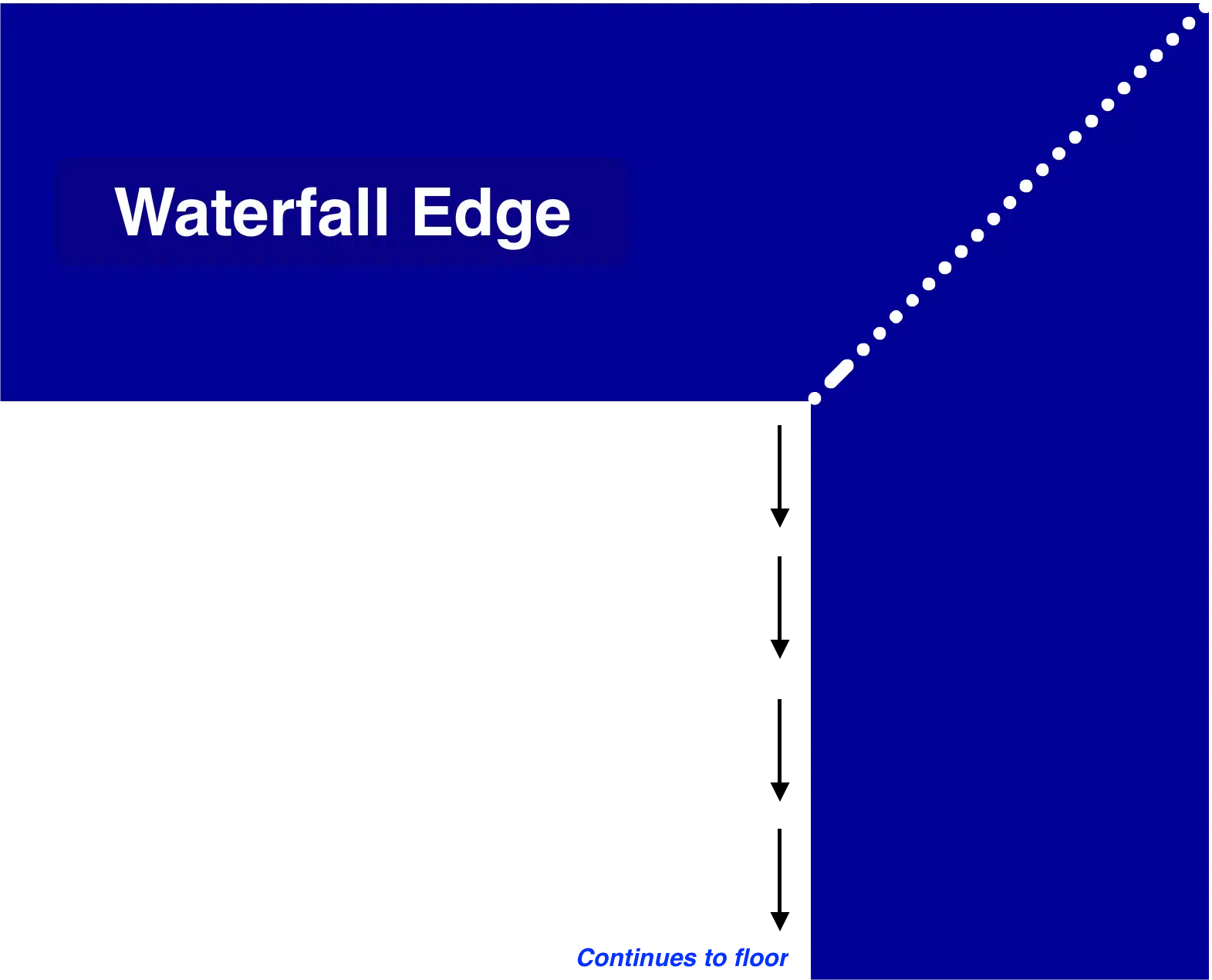
Waterfall Edge
With a waterfall edge, the countertop turns 90 degrees at the end of an island or cabinet run and continues straight down to the floor. The top and side pieces meet at a 45 degree mitered joint, so the corner reads as one piece of stone.
Each edge profile carries its own narrative, ready to blend with and enhance the story of your home. Whether your space speaks of understated elegance or bold statements, the perfect edge profile awaits to complete your vision. Let these choices inspire you to create a space that reflects your unique style and the inherent beauty of natural stone.